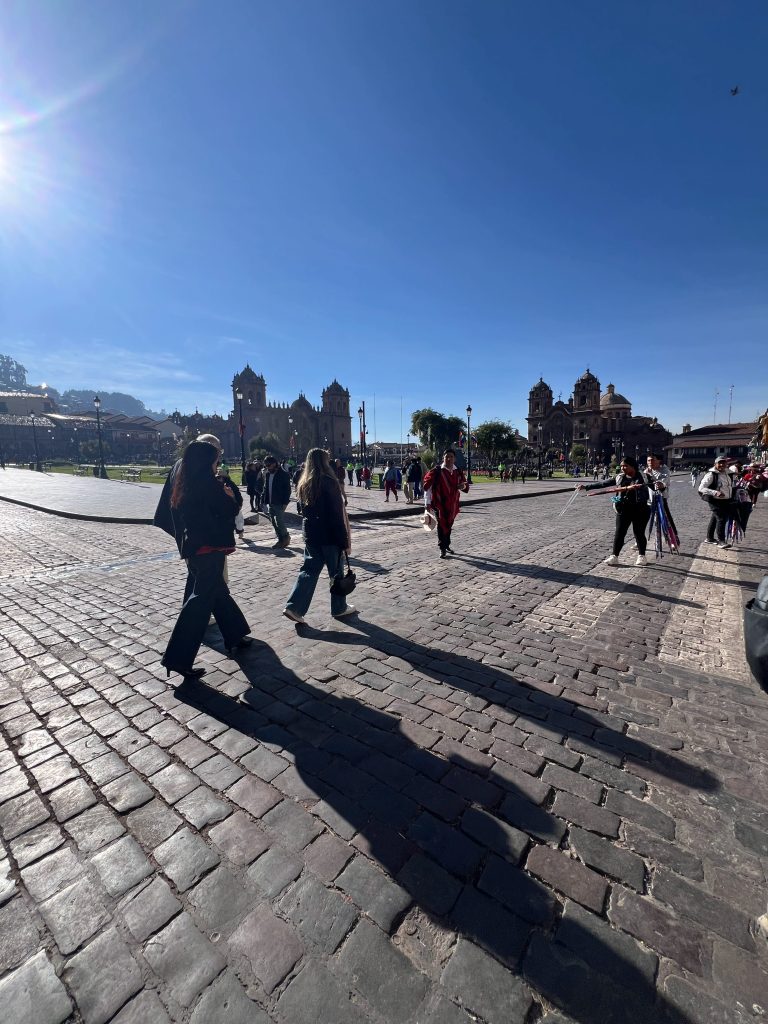
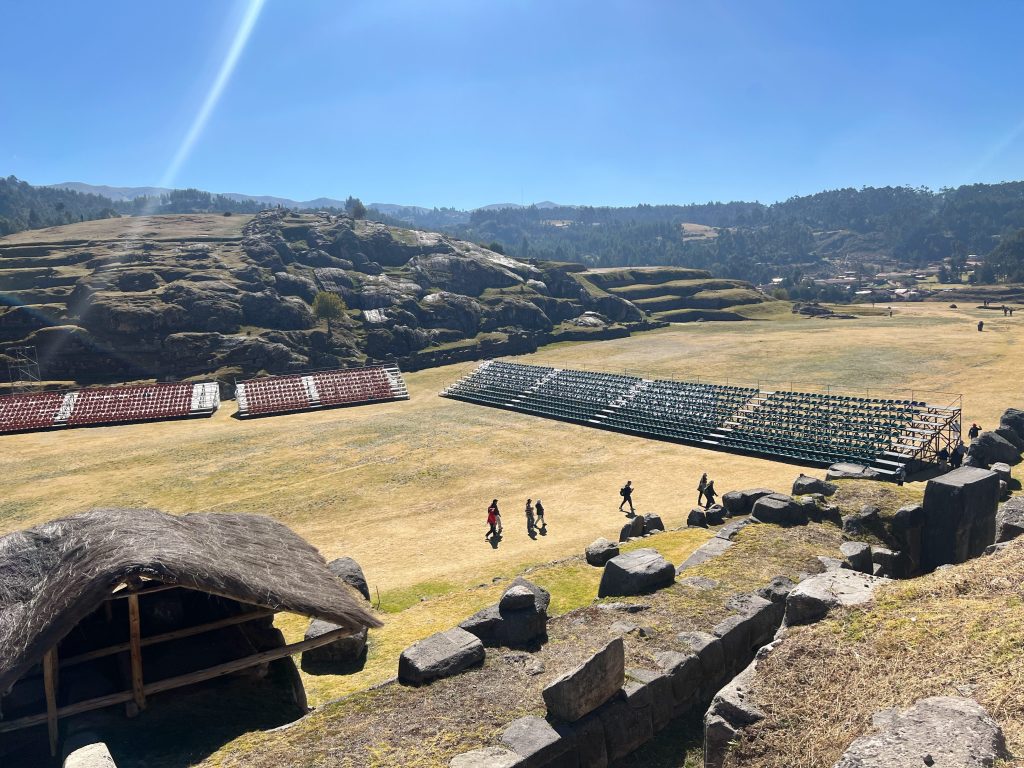
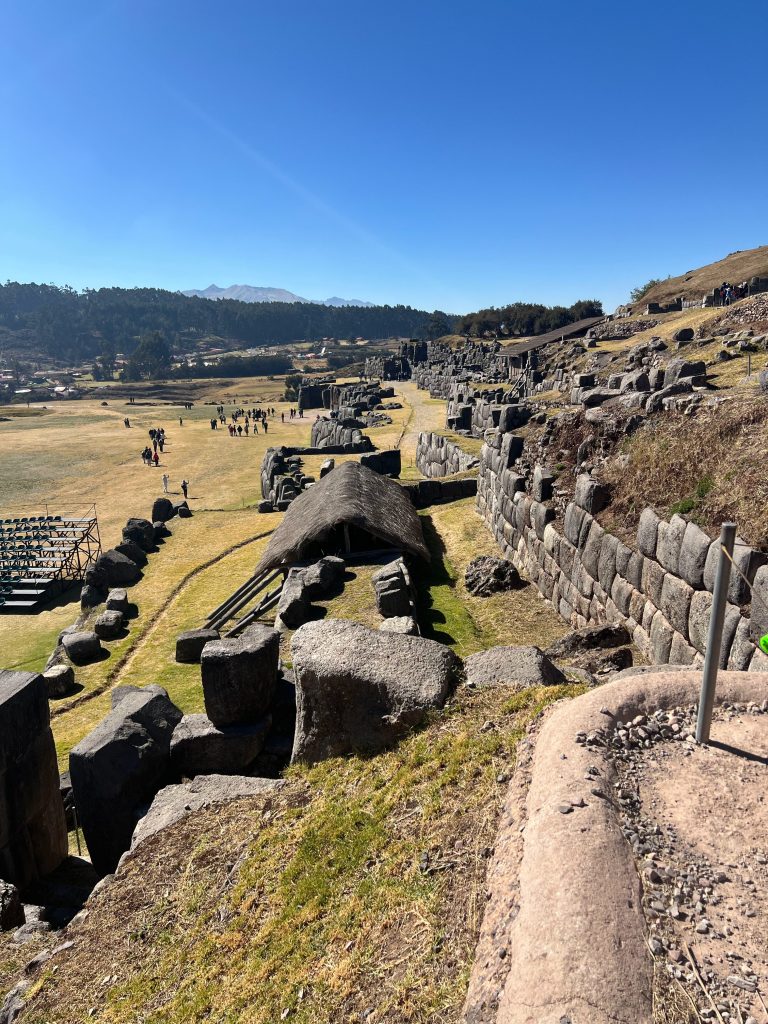
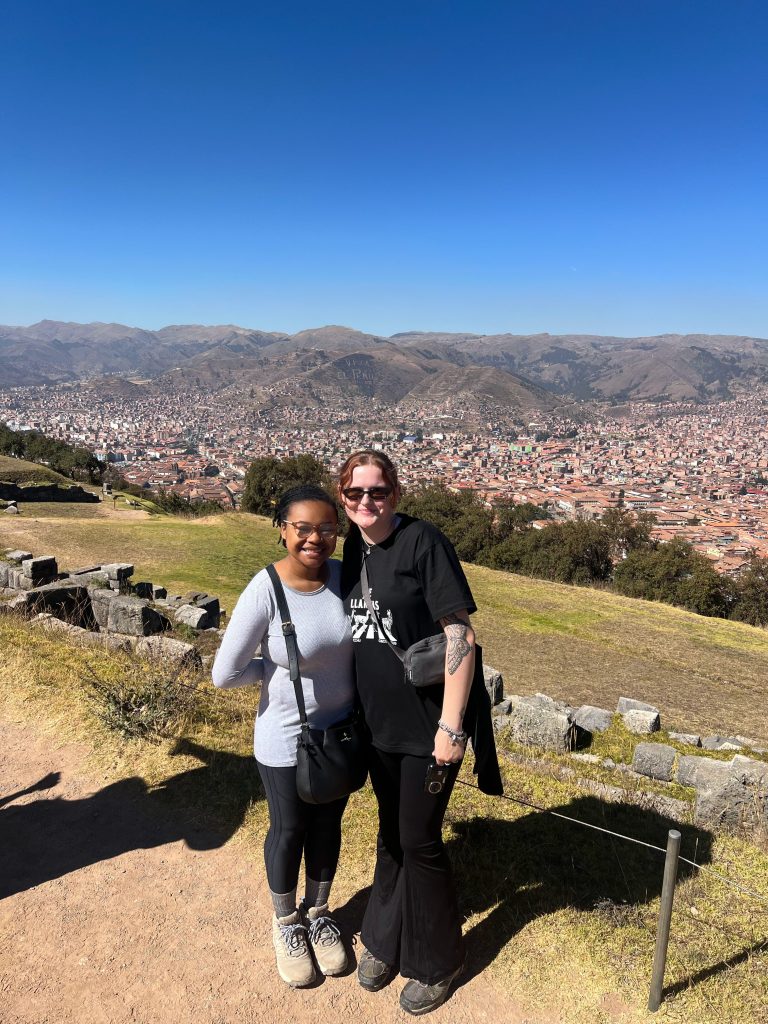
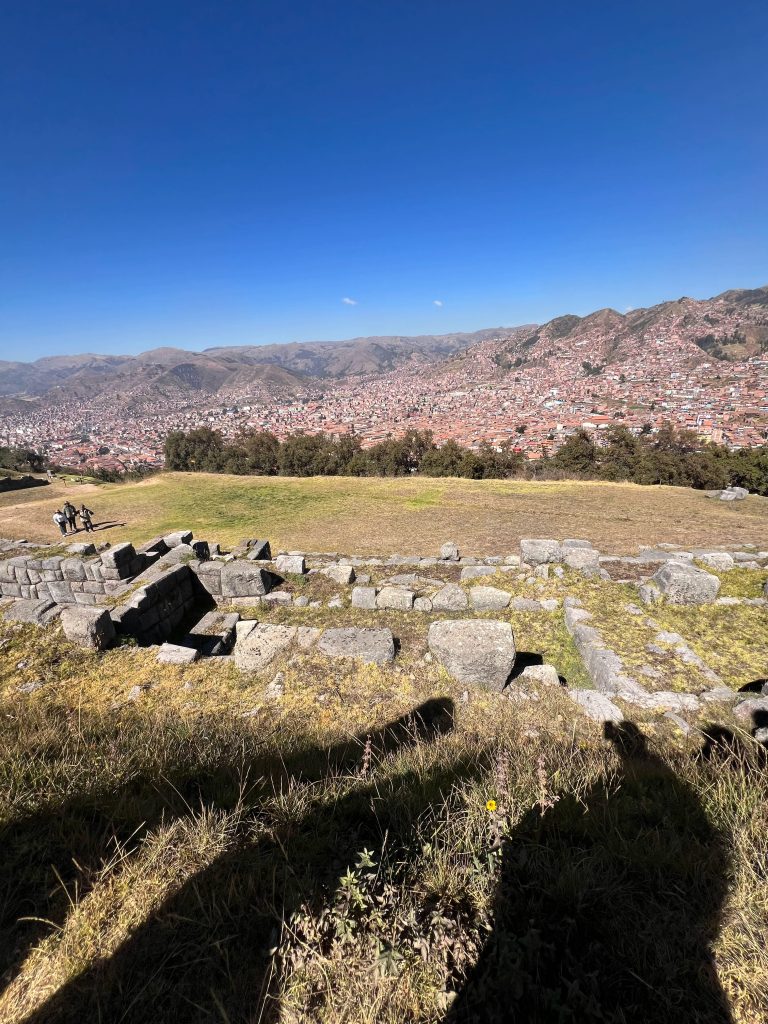
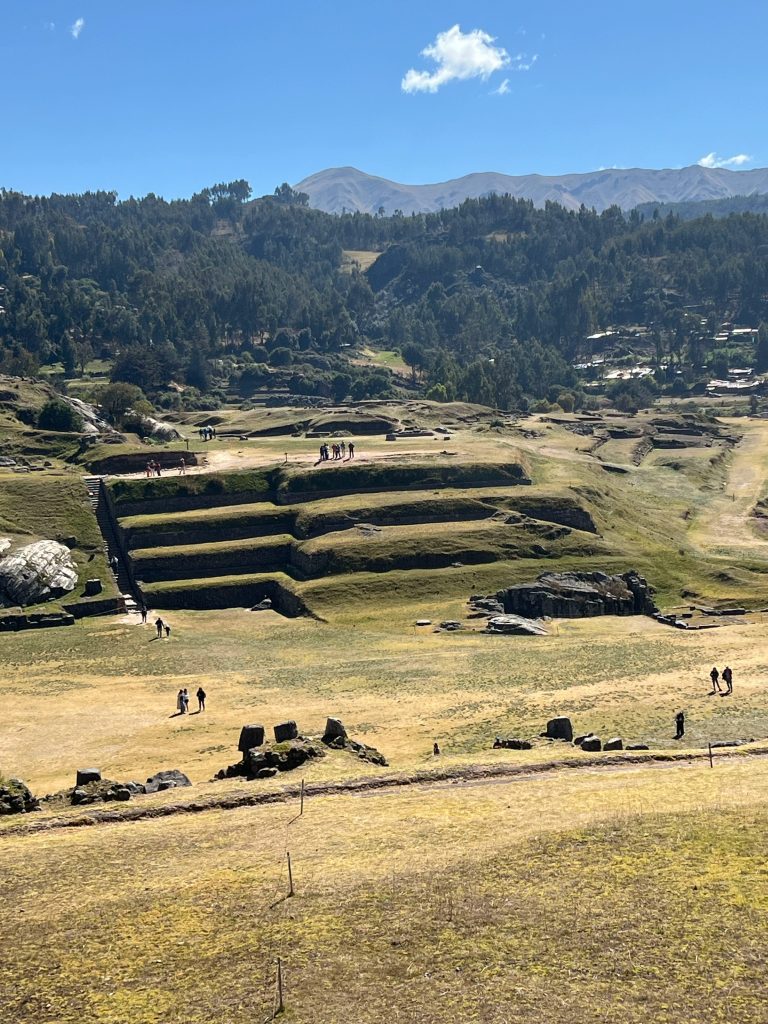
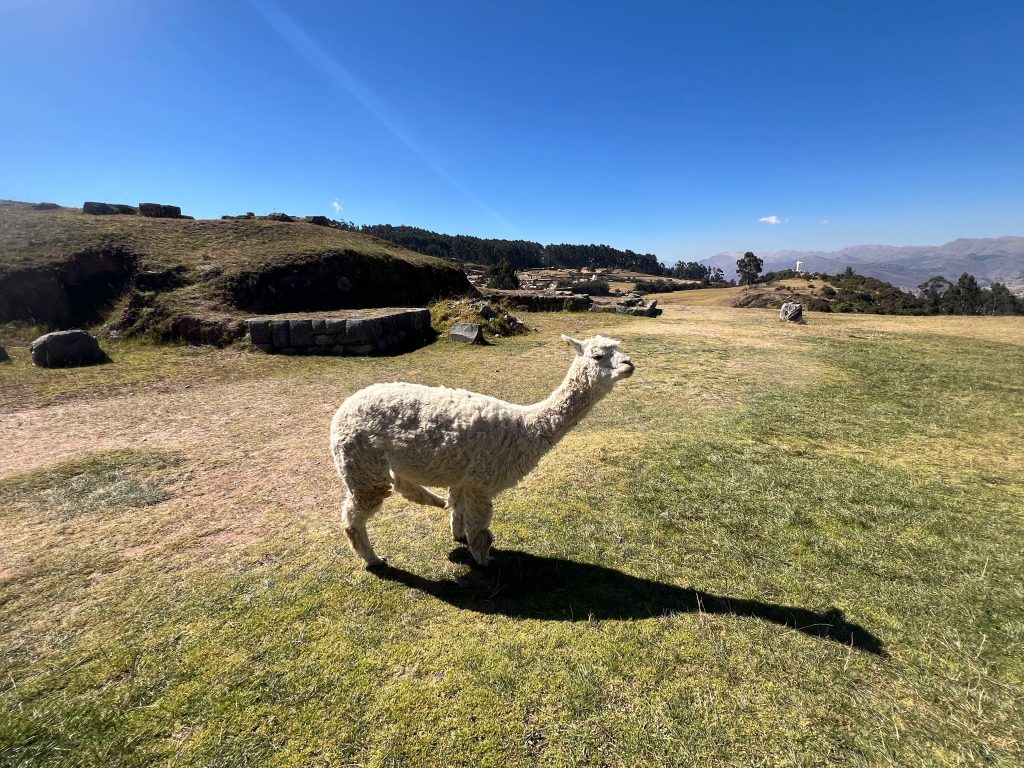
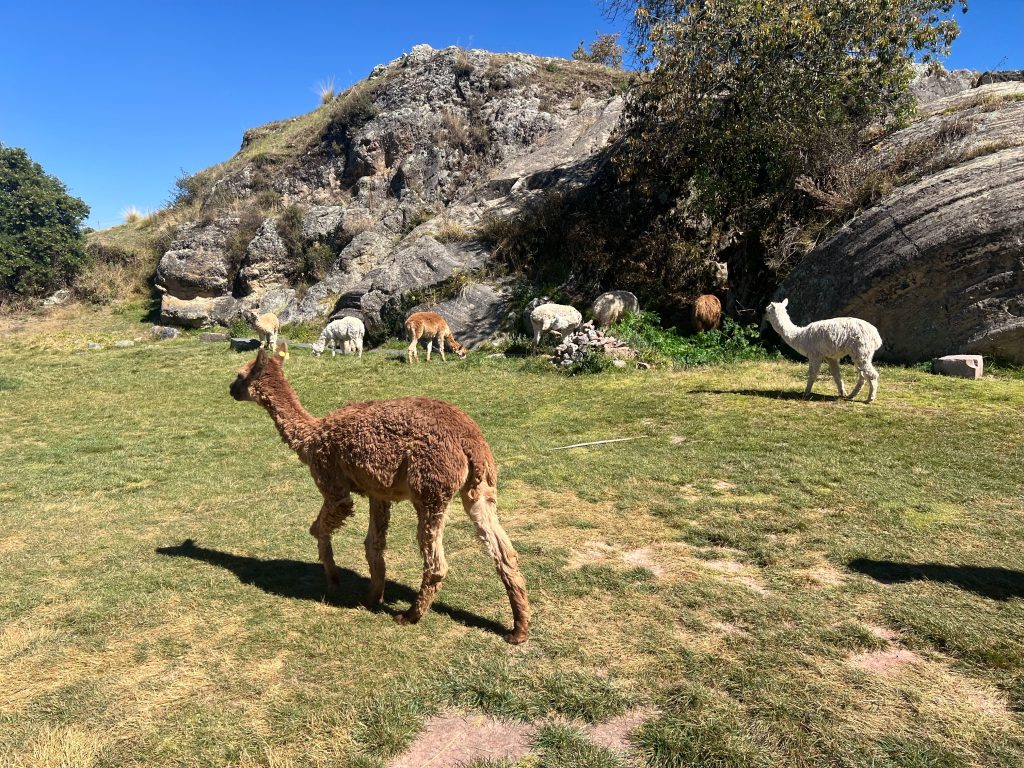
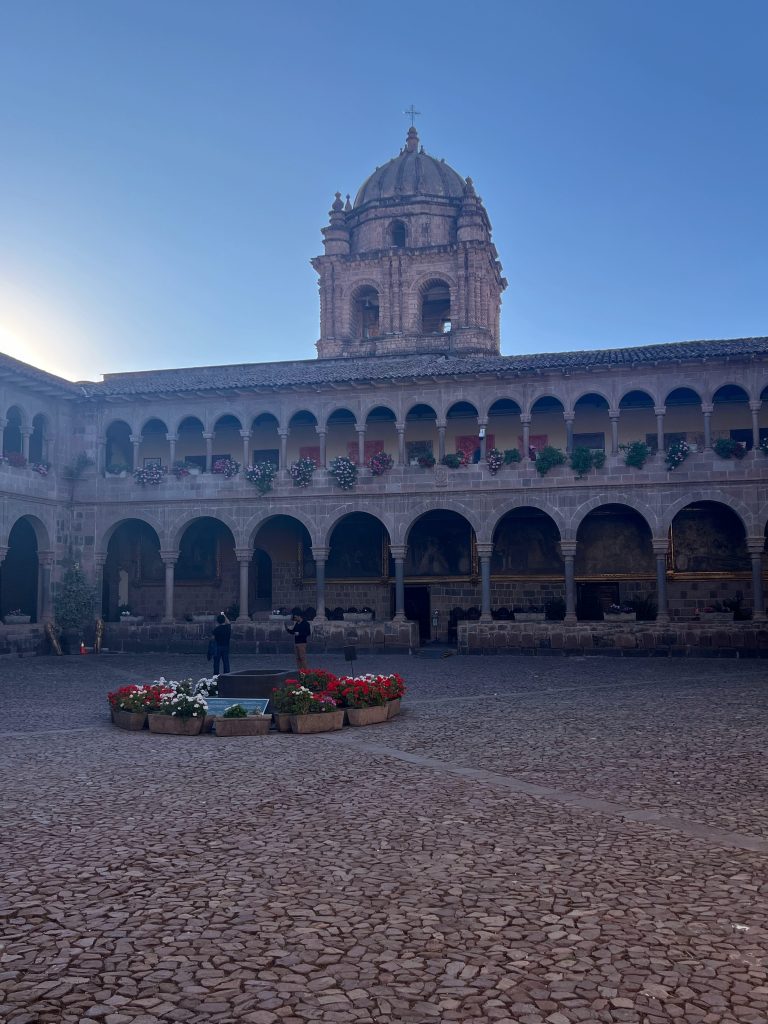
Currently on a flight back home and through all the chaos, almost getting lost in the airport, anticipating to go away and board the plane, sweating and moving through crowds of people, I’m filled with gratitude. Like I have shared before, this was my first time traveling abroad and I can now say I did it. I achieved something that once didn’t seem possible when I first started college. Our last days in Cusco were filled with activities like spending time at the cathedral built atop Incan foundations, the Koricancha temple complex, the massive stone fortifications of Sacsayhuaman, the Inti Raymi festival, a cooking class, visiting companies like Alpaca Expeditions and Manos de la Comunidad, participating in a bean-to-bar workshop at ChocoMuseo, and speaking with Ms. Nilda of Centro de Textiles Tradicionales del Cusco.
Echoes of Empire: Heritage in the Wake of Conquest
Walking through Cusco means navigating a physical timeline defined by conflict, adaptation, and intense resilience. The city functions as a living archive where colonial history, indigenous culture, and modern commerce actively collide. This coexistence is rarely seamless, and it is often profoundly uneasy.
When observing landmarks like the Cusco Cathedral or the Santo Domingo Convent, which was constructed directly over the foundations of the Koricancha sun temple, the architecture delivers an unmistakable statement about imperial conquest. The Spanish forces did not merely establish a new administrative center. Instead, they purposefully repurposed the exquisite, interlocking stonework of the Inca empire to anchor and elevate their own religious and political symbols. This was a deliberate act of domination, a physical manifestation of an empire attempting to bury and suppress the sacred geography of the population they sought to subdue.
However, that calculated display of power tells only part of the story. The enduring presence of the underlying Incan stonework reveals a deeper narrative of cultural survival. These indigenous foundations remain clearly visible, remarkably intact, and structurally superior to the edifices built on top of them. Historically, when major earthquakes devastated Cusco and leveled the European construction, the precision engineered Incan walls withstood the seismic shocks without mortar. This architectural reality serves as a powerful metaphor. It demonstrates that while the visible surface of a society can be violently altered, the foundational identity and heritage of its indigenous people are impossible to erase.
In the modern era, global tourism and corporate expansion are superimposing a third layer onto this historic landscape. Where Spanish colonial churches once claimed the spaces of Incan palaces, international franchise brands, global banks, and boutique luxury hotels now occupy the interior corridors of those same colonial structures. This contemporary layer introduces a different, more subtle power dynamic centered on economic globalization.
While the influx of international tourism provides vital capital and economic opportunities for the region, it simultaneously creates friction. This corporate layer risks commercializing sacred spaces and converting authentic, living traditions into curated commodities tailored for foreign consumption. The tension in Cusco today is no longer about military conquest, but rather about how a historic community maintains its cultural integrity and spatial autonomy against the pressures of global market forces.
The Ethics of Heritage: Corporate Responsibility on Sacred Ground
Operating a business within a UNESCO World Heritage site introduces distinct legal restrictions and deep ethical mandates. From a strict legal standpoint, businesses must comply with rigorous zoning, historical preservation laws, and international conservation frameworks designed to protect the physical infrastructure from degradation. However, the ethical obligations extend far beyond maintaining old stonework.
Enterprises operating in these spaces owe the surrounding community an active duty of cultural stewardship and economic justice. They carry a responsibility to ensure that their commercial presence does not drive gentrification, displace local residents, or treat indigenous traditions as a mere marketing backdrop. When a business enters a community with a distinct identity and clear economic disparities, its operational choices either help preserve that living heritage or contribute to its dilution.
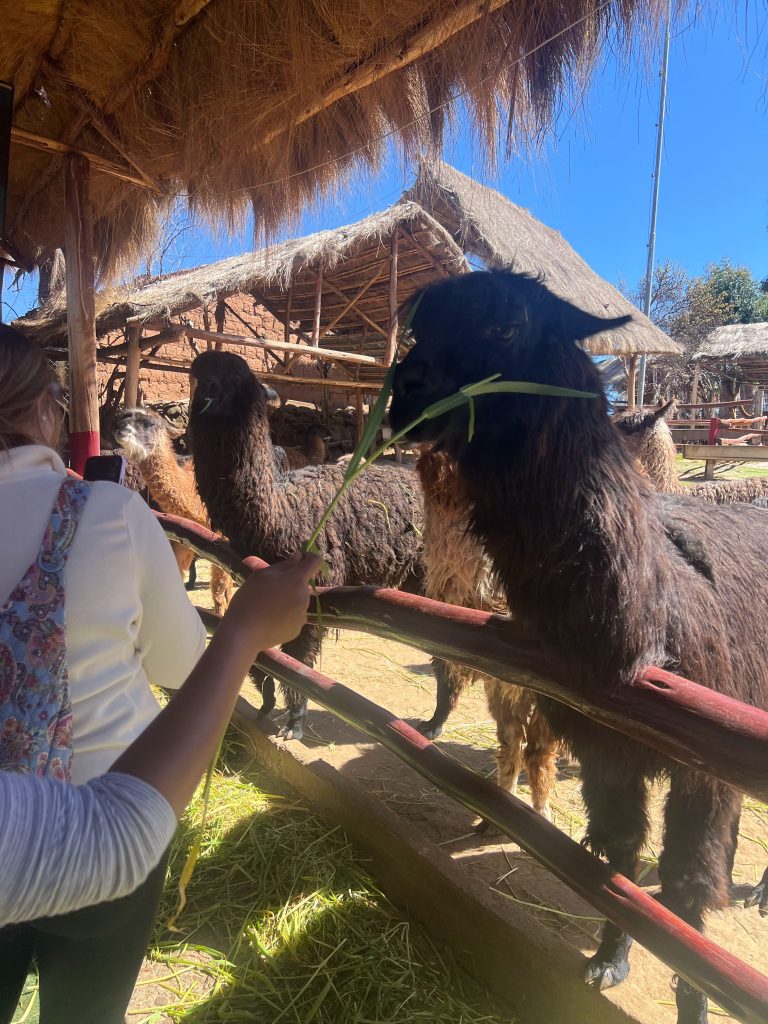
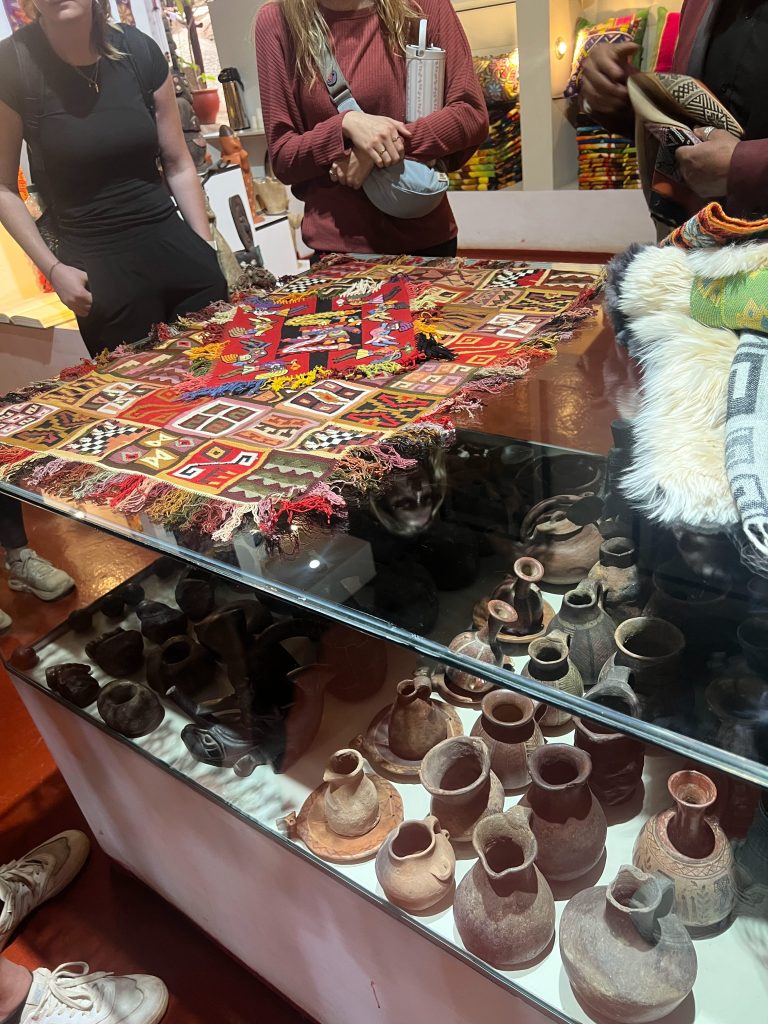
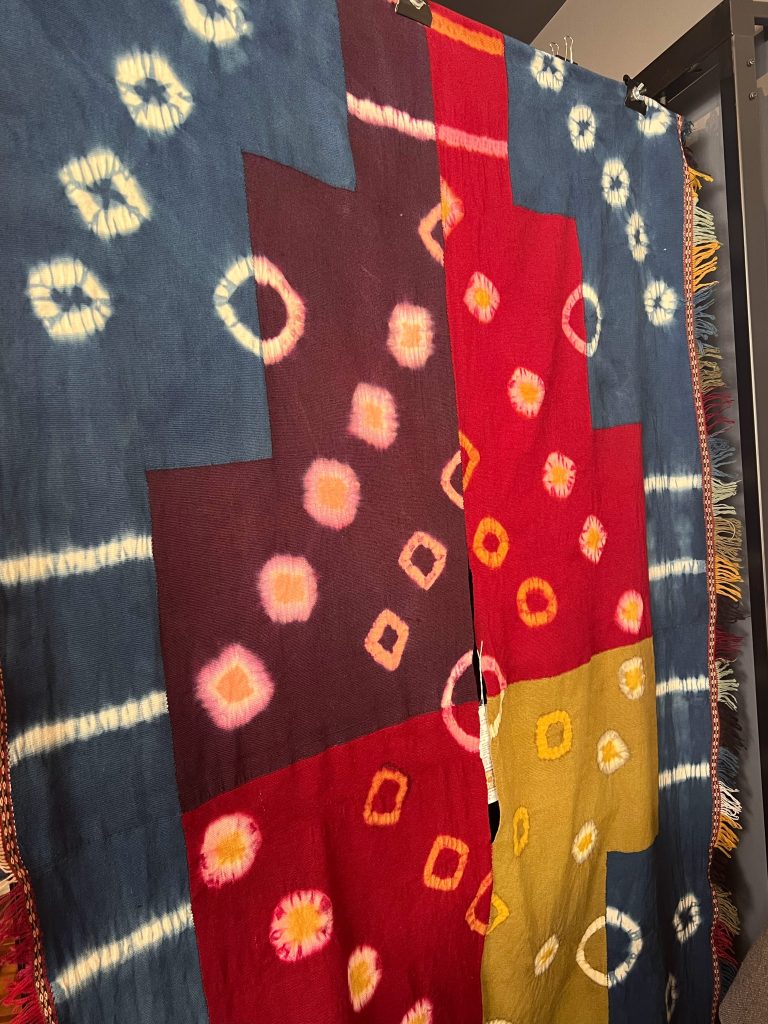
The community-anchored organizations we visited in Cusco demonstrate how businesses can actively fulfill these ethical obligations by integrating local welfare directly into their operations. For example, think of Manos de la Comunidad and Centro de Textiles Tradicionales del Cusco. Both organizations operate on a model where cultural preservation and economic self-determination are directly linked. Instead of treating traditional weaving as a static historical artifact, they establish direct, transparent supply chains that connect indigenous artisans with global markets. This structure ensures that the financial profits of textile art return directly to the weavers, turning ancient knowledge into a viable livelihood for modern generations. Another example is Alpaca Expeditions. This locally owned enterprise provides a template for how the adventure tourism sector can move away from extractive business practices. In an industry where external operators frequently underpay local labor, this company builds regional equity by prioritizing fair wages, proper cold-weather gear, health insurance, and satellite communication for their porters and guides. They also reinvest profits back into the rural villages where their staff live, demonstrating that community benefit can be treated as a core performance metric rather than a peripheral donation. Lastly, think of the ChocoMuseo. The bean-to-bar chocolate manufacturing process illustrates the stark economic distance between a raw agricultural commodity and a premium finished product. Transforming raw cacao beans into retail chocolate requires intense physical labor, highlighting the hidden ethical decisions embedded within global food supply chains. True corporate responsibility in this context means acknowledging that sustainability is impossible if the smallholder farmers at the foundational level of production are left in poverty while corporate entities capture the retail markup.
These localized, community-centered business models provide a sharp contrast to the multinational corporations we evaluated earlier in our program. Large multinational firms often approach corporate social responsibility through a framework of risk management, legal compliance, and public relations. For those global entities, social initiatives are frequently treated as a secondary line item designed to protect brand reputation or secure a social license to operate.
In contrast, these Peruvian enterprises weave the advancement of the local population into their primary corporate identity. Genuine responsibility in an economically vulnerable and culturally rich region cannot simply be about minimizing negative operational impacts or writing philanthropic checks. It requires structural wealth-sharing, long-term capacity building, and a willingness to yield decision-making power to local leadership.
Authentic Corporate Social Responsibility in Peru
Authentic corporate social responsibility in a culturally distinct and economically disparate community like Peru requires a complete shift from top-down philanthropy to deep operational integration and deference. Instead of imposing external ideas of development or treating local traditions as a marketing gimmick, a responsible company aligns its business model with the self-determined needs of the population. This means establishing equitable supply chains, hiring local leaders into executive decision-making roles, providing fair compensation that exceeds the local baseline, and actively protecting the community’s cultural sovereignty and intellectual property. Ultimately, authentic responsibility transforms the corporate presence from an extractive entity into a true economic engine that strengthens, rather than dilutes, the community’s identity and long-term autonomy.
Zooming Out: Looking at the Gap Between Aspiration and Reality
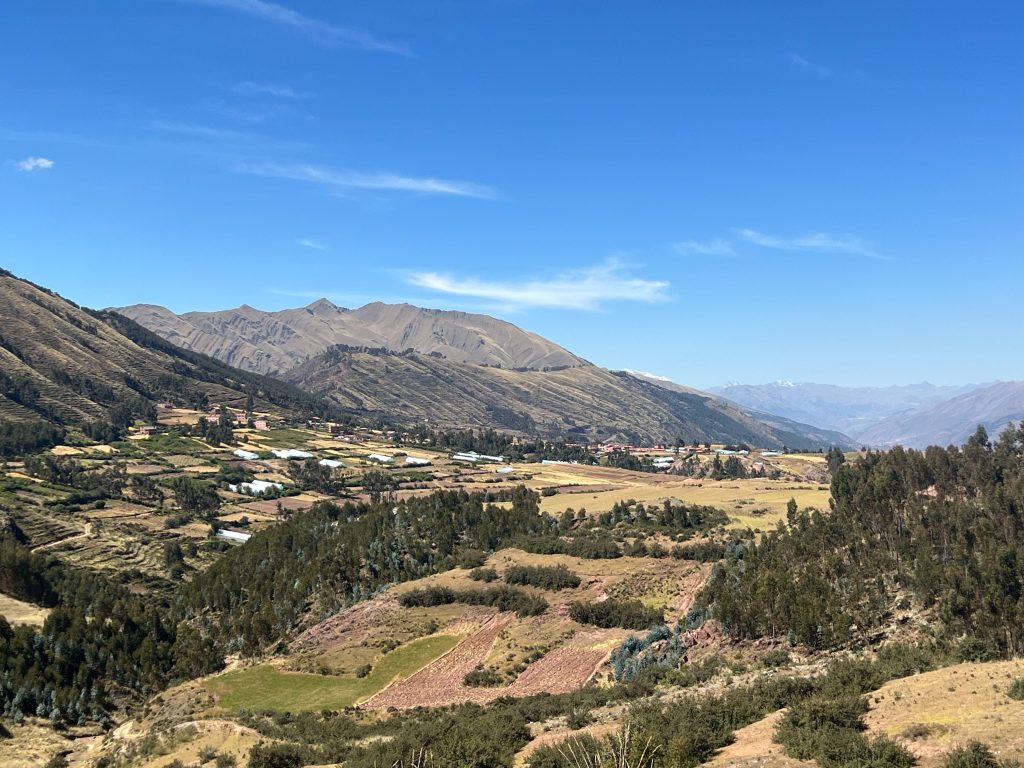
Looking back across our entire journey from the recycling infrastructure of Lima and bustling ports to the Amazon rainforest, the Sacred Valley, and the historic heights of Cusco, a profound tension consistently emerged between conservation and development. The ultimate takeaway from these experiences is the undeniable gap between aspiration and reality. We witnessed the ideal of environmental circularity clash with the harsh constraints of urban waste management, the desire for pristine rainforest conservation struggle against the economic pressures of resource extraction, and the hope for authentic cultural preservation contend with the commercial demands of global tourism. This gap is not a sign of failure, but rather a reflection of the complex reality of sustainable development, proving that good intentions are never enough when operating within deeply entrenched global economic systems.
Moving Forward: Defining What Leadership Looks Like For Me
This program has completely rewritten my definition of what it means to be a leader. Coming into college, leadership often felt like a title defined by authority, metrics, and individual achievement. Standing at the crossroads of Cusco, I realize that true leadership is about stewardship, empathy, and systemic responsibility.
Real leaders do not wait for perfect conditions to act; they step forward to innovate, test new ideas, and work relentlessly for the betterment of the community, even when facing the very real risk of failure. Peru beautifully embodies this mindset. Even as a developing country navigating immense economic pressures, the country is not waiting for future prosperity to prioritize the planet. Instead, local enterprises and regional initiatives are actively practicing sustainability right now, proving that resource constraints are an opportunity for creative, community-driven innovation rather than an excuse for inaction.
I want to be a leader who mirrors this resilience and bridges the gap between aspiration and reality. I want to build organizations where ethical supply chains, environmental accountability, and community equity are non-negotiable fundamentals, not afterthoughts. This journey taught me that the most resilient structures, much like the Incan walls of Sacsayhuaman, are those built with precision, deep respect for the environment, and a commitment to holding together under immense pressure. As I board this flight home, I carry not just the pride of surviving my first trip abroad, but a lifelong commitment to leading with purpose, taking bold risks for the common good, and building foundations that endure.


Leave a Reply